Psychedelic Ceremony vs. Social Use
Every psychedelic journey begins long before the medicine is taken. It begins with intention. With the quiet inner question of why we are here and what we are truly seeking. The quality of that question shapes the entire experience that follows.
In this Sacred Synthesis Conclave, Cynthia Cramblett is joined by ceremonial guide Carla Romero for an honest and grounded exploration of a common and often misunderstood topic. What is the difference between psychedelic ceremony and social or recreational use of sacred medicines? Rather than placing one above the other, this conversation invites clarity, discernment, and conscious choice. The goal is not judgment, but awareness. When we understand the container we are stepping into, we can move with greater safety, sovereignty, and care.
At the heart of this teaching is the understanding that every psychedelic experience happens inside a container. The environment, the people present, the agreements, and the emotional tone of the space all influence what unfolds. The container is not merely background. It actively shapes the journey itself. Two people may take the same medicine and have completely different experiences simply because the context surrounding them is different.
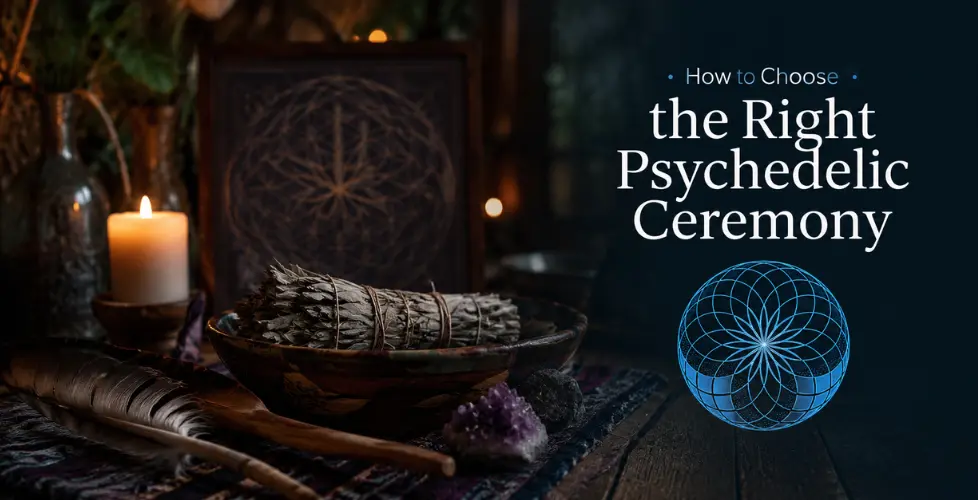
Ceremony is one way of intentionally shaping that container. A ceremonial space marks a threshold and acknowledges that something sacred is taking place. It slows time and invites deeper attention. Preparation is thoughtful. The environment is curated with care. There may be facilitators or guides, clear agreements, and structured integration afterward. Each element supports the nervous system in feeling safe and supported. When the body feels safe, deeper emotional and psychological material can surface without overwhelm. Ceremony often turns our awareness inward, creating space for healing, reflection, and transformation. What arises may include grief, memory, forgiveness, insight, or release. Rather than seeking stimulation, ceremony encourages listening.
Intention plays a central role in this process. Many ceremonial experiences begin with reflection or prayer and questions such as what am I ready to heal or what am I ready to understand. Intention does not control the journey, but it offers direction. It creates a sense of orientation that allows the experience to unfold with meaning. Instead of chasing peak moments, we become receptive to what the psyche is ready to reveal.
Social or recreational use carries a different quality. These spaces often emphasize connection, embodiment, and shared presence. Friends gather to talk, dance, laugh, and celebrate. The medicine may enhance relational openness, creativity, and joy. In this context, the focus is less on deep inner excavation and more on togetherness and expression. For many people, this kind of shared experience can be deeply nourishing. It can remind us of belonging, playfulness, and the simple pleasure of being alive with others. Not every journey needs to be intense or introspective. Sometimes connection itself is healing.
A key distinction discussed in this Conclave is the role of the nervous system. Our capacity to access insight, emotion, or healing is directly linked to whether we feel safe. When we feel threatened or overstimulated, the system contracts and protects. When we feel supported and regulated, the system opens. Ceremonial spaces often create safety through structure, guidance, and clear boundaries. Social spaces may create safety through co regulation, shared energy, movement, and connection. Both approaches can support well being. They simply do so in different ways. Understanding what helps your own body relax and open is essential.
Group dynamics also differ between these settings. Ceremonial environments tend to invite vulnerability and introspection. Silence, stillness, and emotional honesty are often welcomed. Social settings encourage outward expression and engagement with others. Neither approach is inherently more conscious or more spiritual. They serve different needs at different times. Some seasons of life call for deep inner work. Other seasons call for celebration and community. Wisdom comes from recognizing which season you are in and choosing accordingly.
One of the most important reminders from Cynthia and Carla is that there is no moral hierarchy between these paths. Ceremony is not superior, and social use is not inferior. What matters most is consciousness. Are you choosing intentionally? Are you prepared? Do you feel safe and supported? Are you honoring your limits? These questions help cultivate sovereignty and responsibility, which are far more important than the specific format of the experience.
Regardless of the setting, integration remains essential. The real transformation happens after the journey, when insights are reflected upon and woven into daily life. Rest, journaling, conversation with trusted community members, and gentle lifestyle changes help translate experience into lasting growth. Without integration, even profound moments can fade into memory. With integration, even subtle experiences can become meaningful turning points.
This teaching is educational and informational only and does not provide medical advice. Its purpose is to support awareness and discernment so that each person can make choices that align with their own needs and values.
Ultimately, both ceremony and social connection can be sacred when approached with care. The sacred is not defined solely by the structure of the space, but by the presence we bring into it. When we move with intention, respect, and responsibility, any container can become a place of learning, healing, and connection.
Join our weekly Conclaves every Thursday and continue exploring these conversations with our growing community at Skool.
Join now: https://www.skool.com/thesacredsynthesis