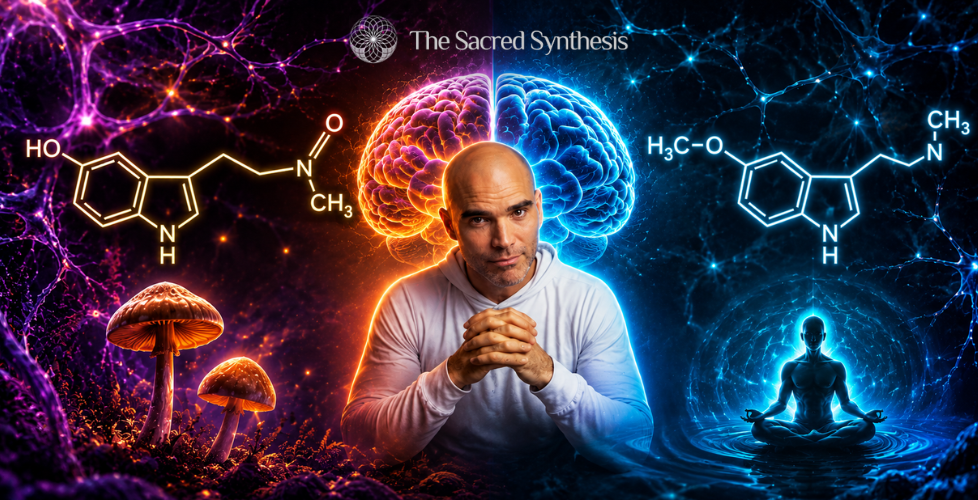
As the science of consciousness continues to evolve, two compounds have drawn intense interest from researchers, therapists, and spiritual practitioners alike: Psilomethoxin and 5-MeO-DMT. Both are serotonergic psychedelics capable of profound neurological and experiential effects, yet they differ meaningfully in their molecular architecture, receptor dynamics, and the quality of the states they induce. Understanding the neuroscience behind Psilomethoxin vs 5-MeO-DMT is not merely an academic exercise — it has real implications for those seeking healing, transformation, and deeper self-understanding. Whether you are a wellness practitioner, a consciousness explorer, or someone navigating trauma recovery, this guide provides a research-grounded, experiential, and practical framework for making informed decisions.
What Is Psilomethoxin?
Psilomethoxin (4-hydroxy-5-methoxytryptamine, or 4-OH-5-MeO-DMT) is a rare tryptamine first described by Alexander Shulgin in TiHKAL. Structurally, it sits between psilocin and 5-MeO-DMT. Some researchers and communities, including the Church of Psilomethoxin, propose that it may form when Psilocybe mushrooms are grown on substrates containing 5-methoxytryptamine, though this remains debated. Anecdotal reports describe its effects as clearer, gentler, and more emotionally open than either psilocybin or 5-MeO-DMT alone.
Interest in Psilomethoxin stems from its potential to bridge the introspective qualities of psilocybin with the profound nondual effects of 5-MeO-DMT. While formal scientific research is still limited, early reports suggest a uniquely balanced experience marked by mental clarity, emotional ease, and a grounded sense of expansion.
At Sacred Synthesis, Psilomethoxin is offered in thoughtfully prepared formulations designed to support intentional exploration within a framework of safety and integration.
Read More: Low vs. High Dose 5-MeO-DMT Ceremonies: A Sacred Practitioner’s Guide to Choosing Your Path
What Is 5-MeO-DMT?
5-MeO-DMT (5-methoxy-N,N-dimethyltryptamine) is a potent naturally occurring psychedelic found in a wide range of plant species and in the venom of the Sonoran Desert toad (Bufo alvarius). It is one of the most powerful known psychedelic substances by dose, with active thresholds beginning at just 1–5 mg when administered via inhalation.
Its neurological profile is distinct. 5-MeO-DMT has high binding affinity for serotonin receptors — most notably the 5-HT1A and 5-HT2A subtypes — and produces rapid, overwhelming alterations in consciousness that typically last 15–45 minutes. The subjective experience is often described as total dissolution of the self, a merging with infinite awareness, and what researchers at Johns Hopkins and other institutions have termed a “complete mystical experience.”
Research published in peer-reviewed journals has begun validating what indigenous traditions have long understood: 5-MeO-DMT may carry significant therapeutic potential for depression, anxiety, PTSD, and existential distress. However, its intensity and abruptness make set, setting, and experienced facilitation critically important.
Molecular Structure: The Key Differences
To understand the experiential and neurological differences between these two compounds, we must start at the molecular level.
| Feature | Psilomethoxin | 5-MeO-DMT |
| Chemical Name | 4-Hydroxy-5-methoxytryptamine | 5-Methoxy-N,N-dimethyltryptamine |
| Chemical Formula | C₁₁H₁₄N₂O₂ | C₁₃H₁₈N₂O |
| Key Structural Feature | 4-hydroxy + 5-methoxy group | 5-methoxy group + N,N-dimethyl group |
| Natural Sources | Biosynthesized in specific Psilocybe species | Bufo alvarius toad venom; various plants |
| Molecular Weight | ~206 g/mol | ~218 g/mol |
| Psychedelic Class | Tryptamine (hydroxytryptamine) | Tryptamine (methoxytryptamine) |
The critical structural distinction is the presence of a 4-hydroxy group in Psilomethoxin, which it shares with psilocin. This hydroxyl group significantly modulates receptor binding behavior, making Psilomethoxin’s interaction with neural tissue meaningfully different from 5-MeO-DMT’s. The 5-methoxy group present in both compounds contributes to enhanced potency and altered serotonin receptor selectivity, particularly at 5-HT1A receptors.
Receptor Binding and Serotonin Pathways
The neurochemical story of how these compounds affect consciousness begins with the serotonin system — specifically, where and how each molecule binds to serotonin receptors.
How Psilomethoxin Binds to the Brain
Based on structural analogy with psilocin and 5-MeO-DMT — the two parent compounds from which Psilomethoxin is structurally derived — researchers hypothesize that Psilomethoxin:
- Acts as a partial agonist at 5-HT2A receptors, the primary target of classic psychedelics responsible for altered perception, neuroplasticity induction, and ego-modifying effects.
- Also interacts with 5-HT1A receptors, which are associated with anxiolytic (anti-anxiety), emotionally stabilizing, and empathogenic effects — likely due to the shared 5-methoxy moiety with 5-MeO-DMT.
- May act on 5-HT2C receptors, which regulate mood, appetite, and anxiety.
The presence of the 4-hydroxy group (as in psilocin) means Psilomethoxin likely has a more moderate and manageable activation profile than either parent compound alone, potentially offering a more sustained, emotionally nuanced experience.
How 5-MeO-DMT Binds to the Brain
5-MeO-DMT acts as a potent agonist at 5-HT1A and 5-HT2A receptors, and this dual activation is widely considered responsible for its intense and often overwhelming experiential profile.
Its particularly strong 5-HT1A agonism — stronger than most classic psychedelics — appears to drive the characteristic features of 5-MeO-DMT experiences: rapid onset, oceanic boundlessness, ego dissolution, and a form of consciousness described as non-dual or contentless. Research from the Beckley Foundation and Johns Hopkins has suggested that these features may underlie its remarkable anti-depressant and anti-anxiety effects.
Additionally, 5-MeO-DMT is a potent sigma-1 receptor ligand, which may contribute to its neuroprotective and neuroplastic properties.
Neuroscience: Psilomethoxin vs 5-MeO-DMT
| Parameter | Psilomethoxin | 5-MeO-DMT |
| Receptors | 5-HT2A, 5-HT1A | 5-HT1A (strong), 5-HT2A |
| Onset | 30–90 min | Seconds–2 min |
| Duration | 4–8 hrs | 15–45 min |
| DMN Effect | Moderate suppression | Near-total dissolution |
| Ego Dissolution | Mild–moderate | Intense/complete |
| Neuroplasticity | Likely (hypothesized) | Confirmed (↑BDNF) |
| Emotional Tone | Calm, open, warm | Unity, awe, surrender |
| Sigma-1 Activity | Unknown | Confirmed |
| Anxiety Reduction | Likely | Strong (post-experience) |
Effects on the Default Mode Network
One of the most important neurological discoveries in psychedelic science over the past two decades is the role of the Default Mode Network (DMN) — a set of interconnected brain regions (medial prefrontal cortex, posterior cingulate cortex, angular gyrus) that is active during self-referential thought, mind-wandering, and narrative identity construction.
Overactivity of the DMN is associated with depression, anxiety, rumination, and what some researchers describe as the “tyranny of the self.” Classic psychedelics reliably suppress DMN activity, which correlates with reduced ego rigidity, enhanced perspective-taking, and the subjective sense of dissolution of the ordinary self.
Psilomethoxin and the DMN
Given its structural similarity to psilocin — one of the best-studied DMN-suppressing compounds — Psilomethoxin is hypothesized to produce moderate, graded suppression of the Default Mode Network. This would translate experientially into:
- Reduced self-critical rumination
- Enhanced present-moment awareness
- A softening (rather than elimination) of ego boundaries
- Increased cognitive flexibility and openness
This gentler DMN modulation may make Psilomethoxin particularly well-suited for therapeutic and integration-focused contexts, where complete ego dissolution could be counterproductive for certain individuals.
5-MeO-DMT and the DMN
5-MeO-DMT produces some of the most dramatic suppressions of Default Mode Network activity ever recorded. Neuroimaging data, while preliminary, suggests near-complete deactivation of self-referential networks during peak 5-MeO-DMT states — consistent with experiential reports of total ego dissolution and unity with undifferentiated consciousness.
Research from Imperial College London’s Centre for Psychedelic Research has shown that such profound DMN suppression correlates with lasting reductions in depression scores and increased psychological flexibility — effects that can persist for weeks or months after a single session.
Read More: Psilomethoxin and the Path to Unity Consciousness
Neuroplasticity and Synaptic Growth
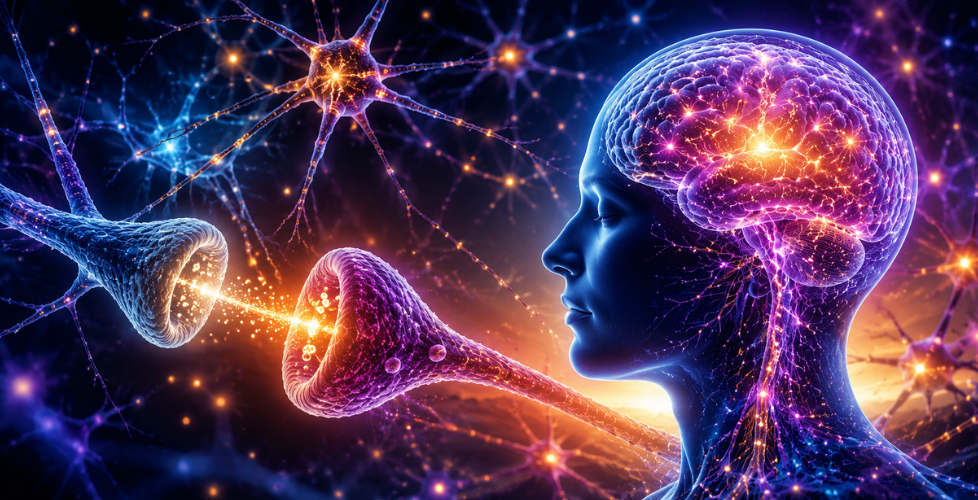
Both compounds may enhance neuroplasticity, the brain’s ability to form new connections and reorganize thought patterns. This is thought to occur mainly through BDNF upregulation and TrkB signaling, which support dendritic growth, spine density, and synaptogenesis (often called “psychoplastogenic” effects).
Research on related psychedelics shows:
- Psilocin may promote hippocampal neurogenesis and cortical synaptic plasticity; Psilomethoxin is hypothesized to act similarly, possibly influenced by its 5-methoxy group.
- 5-MeO-DMT has been shown to increase BDNF, enhance synaptic plasticity, and activate sigma-1 receptors, with studies reporting lasting reductions in depression and anxiety after a single experience.
Overall, psychedelics may temporarily increase brain plasticity, creating a critical window where integration practices, support, and grounding can help shape long-term psychological change.
Subjective Experience Comparison
Understanding neuroscience is important, but understanding what these compounds actually feel like matters just as much, because subjective experience shapes how people can use them most wisely.
The Psilomethoxin Experience
- Warm, heart-centered openness — a quality reminiscent of entactogenic compounds
- Enhanced clarity and presence — without the heavy cognitive loading of high-dose psilocybin
- Gradual unfolding — a gentle arc that allows for conscious navigation of the experience
- Emotional release — tears, laughter, and catharsis, often without dramatic visionary content
- Grounded expansiveness — a sense of connection without loss of functional self-awareness
These qualities suggest Psilomethoxin may occupy a unique niche between classic psychedelics and entactogens like MDMA — offering both neuroplasticity and emotional safety.
The 5-MeO-DMT Experience
- Instantaneous, total ego dissolution — the ordinary sense of self evaporates within seconds
- Non-dual awareness — consciousness without an object or subject; pure being
- Encounter with the infinite — overwhelming and often initially terrifying
- Profound bliss and unity — a merging with what practitioners often describe as “God” or “Source”
- Rapid resolution — the most intense phase typically passes within 20–30 minutes
The abruptness and totality of 5-MeO-DMT’s effects make it one of the most demanding psychedelic experiences available. Proper preparation, experienced facilitation, and robust integration support are not optional — they are essential.
Experience and Effects Comparison Table
| Aspect | Psilomethoxin | 5-MeO-DMT |
| Onset | Slow | Very fast |
| Visuals | Mild | Minimal |
| Ego | Partial dissolution | Total dissolution |
| Mind | Clearer | Dissolved/blank peak |
| Body | Grounded | Loss of awareness |
| Emotion | Warm, open | Overwhelming unity |
| Integration | Easier | Harder |
| Intensity | Moderate | Extreme |
| Use case | Healing, creativity | Deep ego/transcendence |
Therapeutic Applications
Psilomethoxin and 5-MeO-DMT are serotonergic psychedelics explored for mental health, trauma, and existential distress. They differ mainly in intensity, experience, and research depth.
Psilomethoxin (emerging evidence):
- Depression: supports neuroplasticity via 5-HT2A/DMN modulation
- Anxiety & PTSD: 5-HT1A-linked calming and emotional processing
- Grief: gentle emotional opening and integration
- Addiction: increases cognitive flexibility
- Spiritual distress: meaningful but lower-intensity experiences
- Often seen as more trauma-sensitive and approachable
5-MeO-DMT (early research base):
- Rapid, lasting reductions in depression/anxiety (observational studies, e.g., 2019 Frontiers in Psychiatry)
- Strong mystical-type experiences linked to long-term positive change (Johns Hopkins research)
- Studied for PTSD, addiction, and end-of-life anxiety (MAPS, Beckley Foundation)
Summary: Psilomethoxin is positioned as gentler and more accessible, while 5-MeO-DMT is more intense with faster, well-documented effects but requires careful integration.
Read More: A 5-MeO Church on Bryan Johnson’s God Molecule Journey
Safety Considerations
Medical Disclaimer: The information in this article is for educational purposes only and does not constitute medical advice. Neither Psilomethoxin nor 5-MeO-DMT have been approved by the FDA for medical use. Consult a licensed healthcare provider before making any decisions related to these substances. Legal status varies by jurisdiction — it is your responsibility to understand and comply with applicable laws.
Psilomethoxin Safety Profile
- Anecdotal reports suggest a relatively gentle physiological and psychological profile
- Its extended duration allows for more gradual processing — reducing risk of acute overwhelm
- As with all serotonergic compounds, individuals on SSRIs, SNRIs, or MAOIs should exercise caution due to potential serotonin syndrome risk
- Long-term safety data does not yet exist; responsible use, spacing, and integration are essential
5-MeO-DMT Safety Profile
- Its intensity makes psychological preparation and experienced facilitation essential
- Contraindicated for individuals with personal or family history of psychosis or schizophrenia
- Drug interactions with MAOIs are potentially dangerous (notably, Bufo alvarius venom contains bufotenin and other compounds alongside 5-MeO-DMT, complicating safety profiles relative to pure synthetic 5-MeO-DMT)
- Cardiovascular stress at peak intensity warrants screening for cardiac conditions
- Trauma re-emergence without integration support can lead to lasting psychological difficulty
Both compounds demand respect, preparation, and integration. Neither should be approached casually.
Which Compound May Be Better for Specific Intentions?
This is one of the most frequently asked questions in psychedelic wellness circles — and the honest answer is: it depends on where you are, what you need, and how prepared you are.
Choose Psilomethoxin if you:
- Are newer to expanded states of consciousness
- Seek emotional healing, heart opening, or creative exploration
- Want a longer, more navigable journey with gradual unfolding
- Are working in a solo or small group ceremonial context
- Value clarity and groundedness during the experience
- Are exploring neuroplasticity and integration-focused protocols
Choose 5-MeO-DMT if you:
- Have substantial psychedelic experience and robust integration capacity
- Seek existential breakthroughs, non-dual awakening, or profound identity transformation
- Are working with an experienced, trained facilitator in a controlled setting
- Are prepared for the possibility of complete surrender and temporary loss of self
- Have addressed contraindications and have a clear safety framework in place
For many practitioners, these compounds are not rivals but complements — used at different stages of a consciousness development journey.
Spiritual and Integration Contexts
These compounds differ in both effects and spiritual use.
Psilomethoxin is characterized by emotional warmth and clarity, making it suitable for devotional, creative, and relational healing work, with a longer duration that supports deep insight and integration within the same session.
5-MeO-DMT, by contrast, induces complete ego dissolution and is often described as direct experience of ultimate reality. Its key challenge is integrating this non-dual realization into everyday life.
In both cases, integration practice is essential to embody and sustain the insights gained.
Sacred Synthesis offers the Unity Mist as a grounding and integration support tool — a vibrational spray designed to support presence, emotional centering, and the re-anchoring of expanded awareness in the body and breath after ceremonial or psychedelic work.
For those seeking to create a ritual container and set sacred intention before entering expanded states, the Jaguar Light Wand offers a beautifully crafted ceremonial tool to support the lighting of intention and the marking of sacred space.
Your Journey Begins Here
If you’re ready to step into a structured and supported path of transformation, you can explore The Sacred Bundle — a complete toolkit from Sacred Synthesis that brings together formulations, ritual tools, and integration resources into one cohesive system designed to support meaningful inner work.
For those who prefer shared learning and guided progress, the 30-Day Group Protocol within the Sacred Synthesis community on Skool offers a structured group experience with education, accountability, and support for engaging these practices in a way that honors both scientific understanding and spiritual depth.
Key Takeaways
- Psilomethoxin is a novel tryptamine structurally derived from both psilocin and 5-MeO-DMT, offering a unique experiential profile that blends elements of both parent compounds.
- 5-MeO-DMT is one of the most potent known psychedelics, producing rapid and complete ego dissolution via strong 5-HT1A and 5-HT2A agonism.
- Both compounds modulate the Default Mode Network, reducing self-referential activity and increasing psychological flexibility — the neurological basis of their therapeutic potential.
- Both appear to promote neuroplasticity via BDNF pathways, though the evidence base for 5-MeO-DMT is more established.
- Psilomethoxin offers a gentler, more emotionally accessible experience suited to ceremonial use, emotional healing, and integration work.
- 5-MeO-DMT offers a more intense, potentially transformative experience best suited to experienced practitioners with strong facilitation support.
- Integration — the process of embodying and applying insights from expanded states — is essential for both compounds.
- Sacred Synthesis provides thoughtfully designed products and community structures to support the full arc of psychedelic exploration, from intention-setting through integration.
Frequently Asked Questions
Q1. What is Psilomethoxin and how is it different from psilocybin?
Psilomethoxin is a hybrid tryptamine related to psilocin and 5-MeO-DMT. It is reported to feel smoother and more emotionally clear than psilocybin.
Q2. Is Psilomethoxin the same as 5-MeO-DMT?
No. 5-MeO-DMT is fast and intensely ego-dissolving, while Psilomethoxin is described as slower and more manageable.
Q3. How does 5-MeO-DMT affect the brain?
It activates serotonin receptors and strongly suppresses the Default Mode Network (DMN), reducing self-identity and producing ego dissolution and mystical states.
Q4. What does the research say about 5-MeO-DMT and depression?
A 2019 study (Uthaug et al., Frontiers in Psychiatry) found reduced depression, anxiety, and PTSD after naturalistic use. Johns Hopkins research also reports lasting positive psychological change, though results are not yet from controlled clinical trials.
Q5. Is Psilomethoxin safe to use?
Safety is not established due to lack of clinical studies. Risks are not well understood, especially with other serotonergic drugs, so caution is advised.
Read More: Medicine Conclave: Psilomethoxin, Music & Dancing
Final Thoughts
Both Psilomethoxin and 5-MeO-DMT represent remarkable frontiers in consciousness science — each offering a distinct pathway toward healing, self-discovery, and transformation. Psilomethoxin invites a gentler unfolding: emotionally warm, mentally clear, and grounded enough for intentional navigation. 5-MeO-DMT calls those ready for complete surrender into the boundless — an encounter with pure awareness that defies language. Neither is superior; both are tools whose wisdom depends entirely on the readiness, context, and integration surrounding their use. The neuroscience confirms what many experiencers already sense: these are not recreational substances but profound modulators of the brain’s deepest networks. Approach them with respect, preparation, and a commitment to integration — and they may offer some of the most meaningful experiences of a lifetime.