Psilocybin has moved from the margins of countercultural history into the center of one of the most exciting frontiers in neuroscience and psychiatry. Once dismissed as a dangerous hallucinogen, this natural compound — found in over 200 species of fungi commonly called psilocybin mushrooms or magic mushrooms — is now the subject of rigorous clinical research at some of the world’s most respected institutions.
What is driving this renaissance? The science of how psilocybin works in the brain. Researchers are uncovering a detailed, reproducible picture of how this molecule interacts with serotonin pathways, reshapes neural connectivity, and appears to “reset” thought patterns that underlie depression, anxiety, and trauma.
This article breaks down that science clearly and accurately. Whether you’re a curious reader, a mental health professional, or someone exploring options for treatment-resistant depression, this guide will help you understand psilocybin’s mechanism of action, its effects on the brain, and what the latest clinical research shows.
Key Takeaways
- Psilocybin is a prodrug that converts to psilocin in the body, which then acts as a serotonin receptor agonist — primarily at the 5-HT2A receptor.
- The default mode network (DMN) — the brain’s “self-referential” system — is significantly disrupted by psilocybin, which researchers link to its anti-depressive and consciousness-altering effects.
- Neuroplasticity increases after psilocybin use, with studies showing new dendritic growth and enhanced synaptic connectivity that may persist for weeks.
- Clinical research at Johns Hopkins University and Imperial College London has demonstrated significant reductions in depression, anxiety, and PTSD symptoms after psilocybin therapy.
- Psilocybin is not a cure, and individuals should only explore it within legal, medically supervised, or appropriately guided frameworks.
🔍 How psilocybin works in the brain? – Quick Answer
Psilocybin works by binding to serotonin receptors in the brain — primarily the 5-HT2A receptor — triggering widespread changes in neural communication. This disrupts the default mode network, promotes neuroplasticity, and enhances emotional processing, which researchers believe underlies its therapeutic effects on depression, anxiety, and PTSD.
What Is Psilocybin?
Psilocybin is a naturally occurring psychedelic compound classified as a tryptamine alkaloid. It is found predominantly in species of the Psilocybe genus of fungi, though it also occurs in several other mushroom families. In everyday language, these fungi are called psilocybin mushrooms, magic mushrooms, or sacred mushrooms — the latter reflecting their deep history of ceremonial use in indigenous Mesoamerican cultures dating back thousands of years.
Chemically, psilocybin is a prodrug. This means it is pharmacologically inactive on its own. Once ingested, the body’s digestive enzymes — particularly alkaline phosphatases — dephosphorylate psilocybin into its active form: psilocin. Psilocin is structurally similar to serotonin, the brain’s key mood-regulating neurotransmitter, and this similarity is the cornerstone of how psilocybin works.
Read More: The Neuroscience Behind Psilomethoxin vs 5-MeO-DMT
Psilocybin vs. Other Psychedelics
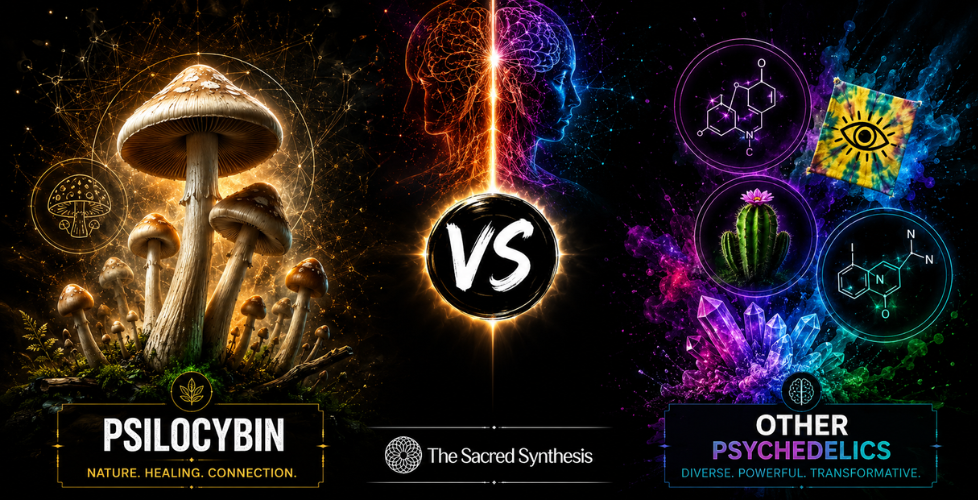
Psilocybin belongs to the broader family of classic serotonergic psychedelics, alongside compounds like LSD (lysergic acid diethylamide) and DMT (dimethyltryptamine). What distinguishes psilocybin — and makes it particularly valuable for research — is its relatively moderate duration of action (4–6 hours), its natural origin, its comparatively favorable safety profile, and its strong historical context of ceremonial use.
| Compound | Source | Duration | Primary Receptor |
| Psilocybin | Fungi | 4–6 hours | 5-HT2A |
| LSD | Synthetic | 8–12 hours | 5-HT2A |
| DMT | Plants/Synthetic | 15–45 min | 5-HT2A |
| Mescaline | Cacti | 8–12 hours | 5-HT2A |
Among newer tryptamine derivatives drawing attention in this space is Psilomethoxin — a structurally novel compound that shares the tryptamine backbone with psilocybin but differs in its reported experiential profile. Peer-reviewed research on Psilomethoxin remains limited, though interest in its serotonergic properties continues to grow.
How Psilocybin Works in the Brain
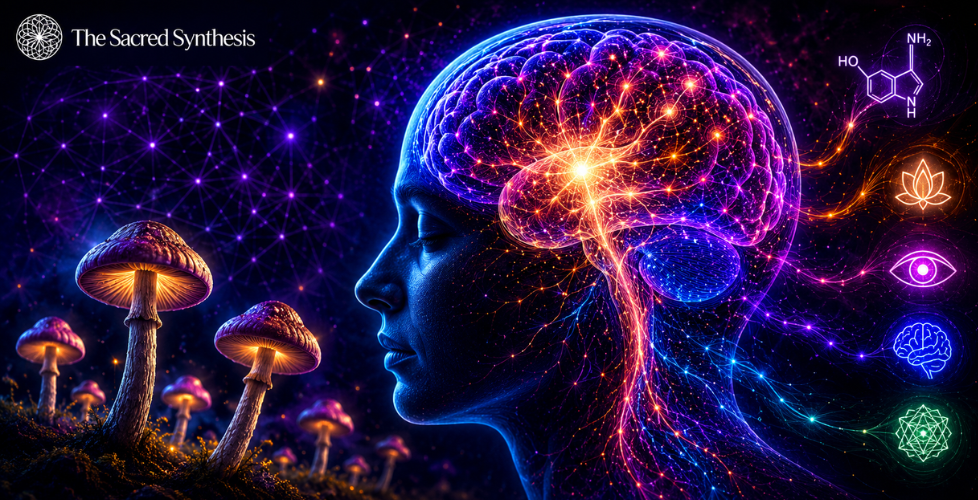
Once psilocybin converts to psilocin in the body, it crosses the blood-brain barrier and begins interacting with the brain’s serotonin system. This interaction is not simple or isolated — it triggers a cascade of neurochemical and network-level changes that affect perception, cognition, emotion, and consciousness.
At its core, psilocybin’s mechanism of action involves three major processes:
- Receptor binding: Psilocin mimics serotonin and binds to multiple serotonin receptor subtypes, with the greatest affinity for the 5-HT2A receptor.
- Network disruption: This receptor binding disrupts normal communication patterns between brain regions, particularly the default mode network.
- Neuroplastic change: The downstream effects of receptor activation promote the growth of new neural connections, a process called synaptic plasticity or neuroplasticity.
Each of these processes plays a role in both the acute psychedelic experience and the lasting therapeutic effects that researchers are documenting in clinical trials.
The Role of Serotonin Pathways
To understand how psilocybin works, you need to understand serotonin — one of the brain’s most important neurotransmitters.
Serotonin (5-hydroxytryptamine, or 5-HT) is produced primarily in the raphe nuclei, a cluster of neurons in the brainstem. From there, serotonergic neurons project throughout the brain, including to the cortex, limbic system (which governs emotion), hippocampus (memory), thalamus (sensory relay), and many other regions. This widespread distribution means serotonin influences an enormous range of functions: mood, sleep, appetite, sexual behavior, memory, cognitive flexibility, and more.
There are at least 14 distinct serotonin receptor subtypes, labeled 5-HT1 through 5-HT7, with various sub-classifications. Conventional antidepressants like SSRIs (selective serotonin reuptake inhibitors) work by increasing the amount of serotonin available in synapses — but they don’t directly activate or mimic serotonin’s action at specific receptors. Psilocybin, by contrast, acts as a direct receptor agonist, meaning it binds to and activates serotonin receptors itself.
How This Differs from Antidepressants
This distinction matters clinically. SSRIs typically require weeks to months of daily use before therapeutic effects emerge, and many patients — estimated at 30–40% — do not respond adequately to first-line antidepressant treatments. Psilocybin appears to exert effects through a fundamentally different mechanism, producing therapeutic outcomes after just one or two sessions in some clinical trials. This has led researchers to investigate whether psilocybin could be especially valuable for treatment-resistant depression — a population for whom conventional pharmacotherapy has failed.
Understanding the 5-HT2A Receptor
The 5-HT2A receptor is the primary target of psilocin in the brain, and it is considered the main driver of the psychedelic experience. This receptor belongs to the G protein-coupled receptor (GPCR) family and is found in especially high concentrations in the prefrontal cortex — the brain region responsible for higher-order cognition, decision-making, and self-referential thought.
When psilocin binds to 5-HT2A receptors in the prefrontal cortex, it triggers a series of intracellular signaling events:
- Phospholipase C activation: Leads to the release of intracellular calcium and downstream signaling cascades.
- Increased glutamate release: Stimulates excitatory neurotransmission, which broadly increases cortical activity and brain connectivity.
- BDNF upregulation: Brain-derived neurotrophic factor (BDNF) expression increases, promoting neuronal survival and growth.
- Beta-arrestin signaling: A secondary signaling pathway that may contribute to longer-term neuroplastic effects.
Why the 5-HT2A Receptor Matters for Therapy
Studies have shown that blocking the 5-HT2A receptor with antagonists (drugs that prevent its activation) completely abolishes the psychedelic effects of psilocybin. This is strong evidence that 5-HT2A activation is not merely associated with the experience — it is causally necessary for it. This finding also helps researchers design studies to understand which aspects of the psychedelic experience are therapeutically essential, and which are incidental.
Interestingly, research from 2022 published in Nature demonstrated that the therapeutic effects of psilocybin in depression models may not require the full subjective psychedelic experience — opening the door to developing “non-hallucinogenic” analogs that retain therapeutic benefit. However, other researchers argue the mystical or peak experience may itself be therapeutically meaningful and not easily separable from the pharmacology.
This line of inquiry also extends to compounds like Psilomethoxin, which some practitioners describe as producing milder 5-HT2A engagement than classical psilocybin — though its receptor binding profile has not yet been formally characterized in published literature.
Psilocybin and the Default Mode Network
One of the most important and reproducible findings in psychedelic neuroscience is psilocybin’s effect on the default mode network (DMN).
The DMN is a set of interconnected brain regions — including the medial prefrontal cortex, posterior cingulate cortex, and angular gyrus — that are most active when the mind is at rest and focused inward. It is associated with self-referential processing: daydreaming, rumination, autobiographical memory, and the ongoing sense of “self.” In essence, the DMN is the neural correlate of the ego — the mental architecture through which we experience ourselves as a continuous, separate self.
In people with depression, PTSD, and anxiety disorders, the DMN tends to be hyperactive and overly rigid in its connectivity patterns. This is thought to underlie ruminative thinking — the repetitive, negative thought loops that are a hallmark of these conditions.
Read More: Psilomethoxin and the Path to Unity Consciousness
What Psilocybin Does to the DMN
Neuroimaging studies, including landmark work from Imperial College London using fMRI, have consistently shown that psilocybin dramatically reduces activity and connectivity within the DMN. At the same time, it increases communication between brain regions that don’t normally talk to each other — a phenomenon called increased functional connectivity or “cross-network communication.”
This state has been described metaphorically as the brain becoming “more democratic” — with information flowing more freely across networks rather than being constrained by habitual patterns. Researchers like Dr. Robin Carhart-Harris have proposed that this represents a temporary shift from rigid, high-entropy thinking to a more flexible, open state — and that this flexibility is what allows therapeutic insights to emerge.
The suppression of DMN activity during a psilocybin session correlates strongly with the intensity of the mystical or ego-dissolution experience — and, importantly, with the degree of therapeutic benefit reported weeks later.
Neuroplasticity and Brain Rewiring
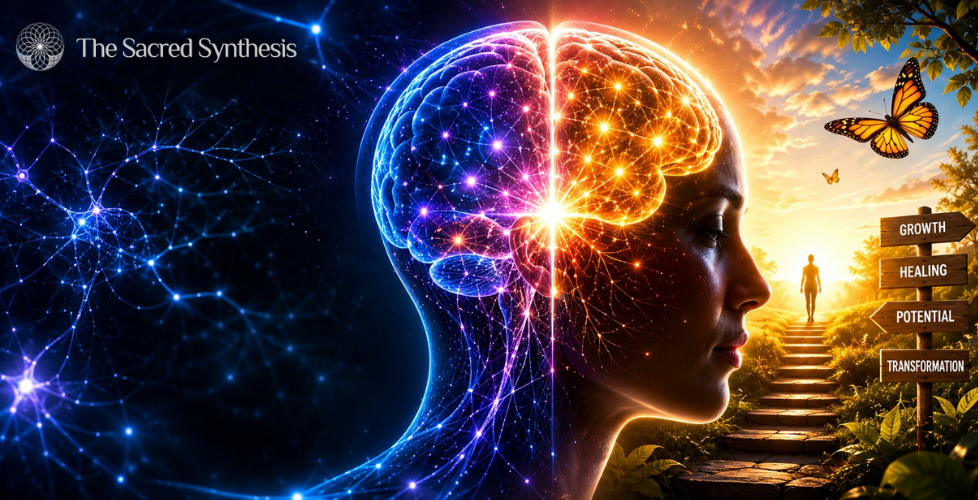
Perhaps one of the most remarkable discoveries in recent psilocybin research is its capacity to promote neuroplasticity — the brain’s ability to form new neural connections and reorganize existing ones.
For many years, it was believed that adult brains were largely fixed in their structure after early development. We now know this is not accurate. The brain retains plasticity throughout life, but it can be enhanced or suppressed by various factors. Chronic stress, depression, and trauma are associated with reduced neuroplasticity, particularly in the hippocampus and prefrontal cortex. Conversely, certain compounds and experiences can promote neuroplastic growth.
What the Research Shows
A 2021 study published in Neuron by researchers at UC Davis found that psilocybin administration in mice produced a rapid and sustained increase in dendritic spine density — the small protrusions on neurons that form synaptic connections. These structural changes were observed in the prefrontal cortex and persisted for at least 34 days after a single dose. This represents a form of long-term structural brain change triggered by a brief pharmacological event.
Key neuroplastic mechanisms associated with psilocybin include:
- BDNF upregulation: Brain-derived neurotrophic factor promotes neuron survival, differentiation, and synapse formation. Psilocybin increases BDNF expression, particularly in frontal brain regions.
- Synaptic density increase: New synaptic connections form, which may underlie enhanced cognitive flexibility and the breaking of rigid mental patterns.
- Neurogenesis: Some evidence, primarily from animal studies, suggests psilocybin may promote the birth of new neurons (neurogenesis) in the hippocampus — a region critical for learning, memory, and emotional regulation.
- mTOR pathway activation: This molecular signaling pathway, involved in protein synthesis and cell growth, is activated by psilocybin and may mediate some of its plasticity-promoting effects.
Neuroplasticity and Mental Health
These neuroplastic changes may explain something that clinicians have observed: patients often report a sense of “fresh eyes” or “seeing life differently” for weeks or months after a psilocybin session. From a neuroscience perspective, this may literally reflect a period of enhanced brain flexibility during which new, healthier thought patterns and emotional responses can be established — particularly when supported by psychotherapy or structured integration work.
Effects on Depression and Anxiety
The potential of psilocybin to address depression and anxiety is where scientific interest and public attention most strongly intersect.
Treatment-resistant depression (TRD) is defined as depression that has not responded to at least two adequate trials of antidepressant medication. It affects an estimated 100 million people globally and represents one of the most significant unmet needs in psychiatry.
Psilocybin and Depression
A series of landmark clinical trials have now demonstrated that psilocybin-assisted therapy can produce rapid, substantial, and often durable reductions in depressive symptoms. Key findings include:
- A 2020 study in JAMA Psychiatry (Johns Hopkins) found that two sessions of psilocybin-assisted therapy produced remission in 54% of participants with major depressive disorder — results maintained at 12-month follow-up in a subsequent study.
- Research from Imperial College London in 2021 directly compared psilocybin to the SSRI escitalopram (Lexapro) in a randomized controlled trial. Both treatments reduced depression scores similarly, but psilocybin showed greater improvements in emotional processing, anhedonia, and connectedness.
- A 2022 Phase 2 clinical trial by COMPASS Pathways found that a single 25mg dose of synthetic psilocybin produced significant reductions in treatment-resistant depression scores versus placebo, with effects persisting at 12 weeks.
Psilocybin and Anxiety
Research on psilocybin and anxiety — particularly existential anxiety in patients facing life-threatening illness — has been underway since the 2010s. A landmark 2016 study at Johns Hopkins and NYU Langone found that a single high-dose psilocybin session produced immediate, substantial, and long-lasting reductions in anxiety and depression in cancer patients facing end-of-life distress. At 4.5-year follow-up, approximately 60–80% of participants continued to show clinically significant improvements.
Evidence is also emerging for psilocybin’s potential in treating anxiety disorders more broadly, including social anxiety disorder in autistic adults and generalized anxiety, though these areas require more robust clinical investigation.
Psilocybin Therapy in Clinical Research
The clinical model for psilocybin therapy differs fundamentally from how most psychiatric medications are used. It is not a daily pill — it is an experience-based intervention embedded within a therapeutic relationship.
The Standard Protocol
In clinical research settings, psilocybin therapy typically involves:
- Preparation sessions: One or more therapy sessions before the dosing day to build trust, set intentions, and address any concerns. These sessions are crucial for establishing psychological safety.
- Dosing session: A carefully structured session in which the participant takes psilocybin in a comfortable, aesthetically considered room, often with eye shades and curated music. One or two trained therapists or guides are present throughout.
- Integration sessions: Therapy sessions after the experience to process insights, emotions, and any challenging material that arose — and to translate the experience into lasting behavioral and psychological change.
This model reflects the understanding that the pharmacology alone is not sufficient. Set (mindset), setting (environment), and integration (what you do with the experience afterward) all appear to be critical determinants of outcome.
Read More: Hikrodose: A Conscious Path to Psychedelic Wellness
Leading Research Institutions
| Institution | Key Research Areas |
| Johns Hopkins University | Depression, addiction, end-of-life anxiety, psilocybin safety |
| Imperial College London | Neuroimaging, DMN, comparative trials, mechanisms of action |
| NYU Langone | Cancer-related anxiety, addiction |
| COMPASS Pathways | Phase 2/3 trials in treatment-resistant depression |
| UC Davis | Neuroplasticity, structural brain changes |
Potential Risks and Side Effects
Any honest discussion of psilocybin must include a clear-eyed assessment of its risks. While psilocybin has a favorable physiological safety profile compared to many substances — it is not toxic to organs, it is not physiologically addictive, and lethal overdose is considered practically impossible at therapeutic doses — it is not without risk.
Acute Psychological Effects
The most common adverse effects during a psilocybin session include:
- Anxiety or panic, particularly during difficult or unexpected experiences
- Confusion or disorientation
- Paranoia
- Emotional intensity or distress
These experiences — sometimes called “difficult trips” or “challenging material” — are often manageable within a supportive therapeutic setting and can even be therapeutically productive when integrated properly. However, without appropriate preparation and support, they can be frightening.
Contraindications
Psilocybin is not appropriate for people with:
- Personal or family history of psychosis or schizophrenia
- Bipolar I disorder (particularly mania)
- Active suicidal ideation requiring immediate intervention
- Certain cardiovascular conditions (psilocybin produces transient increases in blood pressure and heart rate)
- Current use of serotonergic medications (risk of serotonin syndrome, though rare)
Rare but Serious Risks
- Hallucinogen persisting perception disorder (HPPD): A rare condition in which visual anomalies persist after the substance has cleared. Risk appears low with occasional therapeutic use.
- Psychological destabilization: In individuals with undetected vulnerability, a difficult experience can occasionally precipitate lasting psychological distress.
The risk-benefit calculation for psilocybin therapy is highly individual and context-dependent. This is why rigorous screening, preparation, experienced guides or therapists, and structured integration are the cornerstones of responsible practice.
Who May Benefit from Psilocybin Therapy?
Based on current evidence, the populations most likely to benefit from psilocybin-assisted therapy include:
- People with treatment-resistant depression who have not responded to two or more antidepressant trials
- Cancer patients experiencing existential anxiety and depression related to a life-threatening diagnosis
- People with alcohol or tobacco use disorder (multiple clinical trials show striking quit rates)
- Veterans and others with PTSD, though evidence is earlier-stage than for depression
- People seeking personal growth, insight, or spiritual development in contexts where the legal and cultural framework is appropriate
Some individuals are also exploring structurally related compounds such as Psilomethoxin within ceremonial and community settings. Scientific data on its efficacy and safety profile remains early-stage, and the same principles of preparation, screening, and integration that apply to psilocybin therapy apply equally here.
Integrating the Experience for Lasting Change
Research consistently shows that what happens after a psilocybin experience is as important as the experience itself. Integration — the process of making meaning from the experience, applying insights, and allowing neuroplastic changes to be consolidated — is not optional. It is the mechanism through which the acute pharmacological effects translate into lasting change.
Integration may involve:
- Journaling to capture and process insights, imagery, and emotions from the experience
- Somatic practices such as yoga, breathwork, or meditation to support nervous system regulation
- Psychotherapy with a trained therapist who can help contextualize and work through what arose
- Community support — sharing with others who understand the experience and can provide compassionate, grounded reflection
- Lifestyle changes informed by insights gained — relationship patterns, diet, creative expression, professional direction
The period following a psilocybin experience — particularly the first few weeks — is thought to represent a window of enhanced neuroplasticity during which new patterns of thought and behavior are more easily established. Making conscious use of this window is considered central to lasting therapeutic outcomes.
Medical Disclaimer: This article is for educational purposes only and does not constitute medical advice. Psilocybin remains a Schedule I controlled substance in many jurisdictions. Always consult a qualified healthcare professional before making any decisions related to your mental health treatment.
Resources from The Sacred Synthesis
At The Sacred Synthesis, we are dedicated to providing education, community, and structured support for those exploring the intersection of psychedelics, consciousness, and healing.
If you’re curious about going deeper with this work, here are some of the resources we offer:
The 30-Day Group Protocol is a structured, community-based program designed to support people through the preparation and integration phases of a psychedelic journey. It combines evidence-informed frameworks with peer support, ensuring participants don’t navigate this process alone.
The Sacred Bundle brings together our foundational educational resources, providing a comprehensive foundation for understanding and approaching this work thoughtfully and safely.
Our community on Skool is a growing space for people committed to conscious exploration and authentic integration — a place to ask questions, share experiences, and learn from others walking a similar path.
These resources are not substitutes for professional mental health care. They are educational and community tools for those who are already on a path of self-inquiry and want structured, informed support.
Read More: The Origin of Psilomethoxin
Frequently Asked Questions
Q1. How does psilocybin work in the brain?
Psilocybin converts to psilocin, which binds to 5-HT2A serotonin receptors, disrupts the default mode network, and triggers widespread changes in brain connectivity that underlie its therapeutic and consciousness-altering effects.
Q2. Can psilocybin rewire the brain?
Yes — psilocybin promotes neuroplasticity by increasing dendritic spine density and synaptic connectivity, with a 2021 Neuron study showing structural brain changes persisting over a month after a single dose.
Q3. Can psilocybin help with depression?
Clinical trials at Johns Hopkins and Imperial College London show psilocybin-assisted therapy produces significant reductions in depressive symptoms — including in treatment-resistant patients — with some trials reporting remission rates above 50%.
Q4. What are the risks of psilocybin?
Risks are primarily psychological — acute anxiety, confusion, or rare HPPD — rather than physiological. It is contraindicated for those with a history of psychosis or bipolar I disorder.
Q5. Is psilocybin therapy legal?
Psilocybin is Schedule I federally in the US, but Oregon and Colorado have legalized regulated therapy programs, several cities have decriminalized it, and countries like the Netherlands and Jamaica offer legal guided access.
Conclusion
The science of psilocybin is no longer speculative. A growing body of rigorous research has clarified how psilocybin works in the brain: by activating 5-HT2A serotonin receptors, disrupting the default mode network, promoting neuroplasticity, and temporarily shifting the brain into a more open and connected state. These neurobiological effects appear to underlie the therapeutic benefits that clinical trials are documenting across depression, anxiety, PTSD, and addiction.
What is becoming increasingly clear is that psilocybin is not simply a drug — it is a catalyst. Its therapeutic power seems to arise from the interaction between its pharmacology and the psychological container in which it is experienced: the preparation, the setting, the guidance, and crucially, the integration work that follows. This understanding is also shaping how researchers and practitioners approach structurally related compounds — including Psilomethoxin — where the same principles of set, setting, and integration are considered equally foundational, even as formal scientific study of such compounds remains in its early stages.
This is a moment of genuine scientific excitement and cultural reconsideration. The conversation around psilocybin mushrooms is shifting from stigma to science — and for many people living with treatment-resistant mental health conditions, that shift carries real hope.
If you’re interested in learning more, exploring supportive resources, or connecting with a community of people thoughtfully engaging with this work, The Sacred Synthesis is here to support your journey — with education, evidence, and integrity.