Quick Answer: A Retreat vs Church Membership decision often comes down to what kind of support and experience you’re seeking. Church membership can provide long-term community, connection, and weekly structure, while a retreat offers an immersive environment designed for focused reflection and transformation. In 2026, the right path depends on your personal needs: are you looking for lasting belonging, a deeper breakthrough, or both?
Two words define how millions of people experience their spiritual lives today: belonging and becoming. Church membership has long represented the first — a stable community, a doctrinal home, a weekly rhythm that anchors life through every season. Spiritual retreats represent the second — an intense, intentional pause designed to shake loose what isn’t working and accelerate what is.
In 2026, those two paths are no longer parallel lines. They are intersecting, competing, and being compared directly by people who are done with autopilot spirituality and ready to ask harder questions about how they actually want to grow.
The data behind this shift is striking. According to Gallup, U.S. church membership fell to 47% in 2020 — the first time in eight decades it dropped below the majority mark. Meanwhile, the global spiritual and mindfulness retreats market is valued at $15.8 billion in 2025, projected to reach $38.5 billion by 2033. People are not abandoning their spiritual hunger. They are reconfiguring where and how they feed it.
This guide is for anyone standing at that crossroads. Whether you’re a longtime church member wondering if something is missing or a first-time seeker exploring what is truly worth your time, this breakdown will help you understand the sacred membership plan, make a confident and grounded choice, and find the path that best fits this specific season of your life.
What Is Church Membership and Why Is It Declining?
Church membership is formal enrollment in a religious congregation, reflecting commitment to shared beliefs, worship, community participation, and spiritual accountability. Membership may include attending services, giving donations or tithes, participating in rituals such as baptism or communion, and following shared theological or ethical values.
In the U.S., church membership declined from 70% in 1999 to 47% in 2020, influenced by generational change, institutional distrust, and growing interest in individualized spirituality.assumption is gone.
What Is a Spiritual Retreat?
A spiritual retreat is a dedicated time away from everyday distractions to reflect, reconnect with yourself, deepen your spiritual practice, and gain a clearer sense of purpose.
| Stat | Figure | Source |
|---|---|---|
| U.S. church/synagogue/mosque membership (2020) | 47% — first time in 8 decades below 50% | Gallup, 2021 |
| U.S. church membership (1999) | 70% — a 23-point drop over two decades | Gallup, 2021 |
| U.S. adults attending weekly services (2026) | ~20% — far below historical highs | VolunteerBadge, 2026 |
| U.S. adults attending weekly or near-weekly (2026) | ~30% — stable but far below peaks | VolunteerBadge, 2026 |
The 23-percentage-point drop in church membership since 1999 is not explained by any single factor. Research consistently points to a convergence of forces: generational replacement, as younger cohorts are substantially less religious than their parents and grandparents; a documented rise in institutional distrust following high-profile religious scandals; the normalization of the “spiritual but not religious” identity; and a broader cultural shift toward individualized, non-institutional spiritual practice.
What the numbers conceal is equally important: church membership, for the people who remain, is often more intentional and more meaningful than it was during the era of default belonging. The people still choosing formal religious community in 2026 are largely choosing it — not inheriting it. That shift matters when thinking about whether membership is right for you.
Data note: All church membership and attendance figures cited here are drawn from publicly available Gallup polling and third-party research summaries. As of September 2026, no comprehensive new U.S. Gallup membership study superseding the 2020 data has been published. These figures represent the best available primary source data for this comparison.
What Is a Spiritual Retreat and What Has Changed in 2026?
A spiritual retreat is a short-term experience, often lasting 1–7 days, designed to step away from daily routines and create space for reflection, ceremony, contemplation, guided practices, or community.
In 2026, retreats range from silent meditation and traditional religious programs to structured ceremonial and plant-medicine experiences. What connects them is intentionality: unlike a vacation focused on rest, a retreat encourages participants to pursue personal reflection, clarity, healing, spiritual growth, or a deeper connection with what they consider sacred.
| Stat | Figure | Source |
|---|---|---|
| Global wellness tourism market (2022) | $651B — projected to nearly double to $1.4T by 2027 | The Retreat Planner, 2026 |
| Spiritual & mindfulness retreats market (2025) | $15.8B — projected to reach $38.5B by 2033 | Real Time Data Stats, 2025 |
| Spiritual retreats market (alt. estimate, 2025) | $8.3B — projected to reach $15.2B by 2034 | Market Intel O, 2025 |
| U.S. travelers with a retreat planned in 2026 | 64% — driven by burnout, mental health, intentional travel | BookRetreats, 2026 |
The contrast between declining church membership and the rapidly growing retreat market highlights an important shift in Retreat vs Church Membership preferences. It suggests that while the desire for meaningful spiritual experiences remains strong, more people are choosing different ways to invest their time, attention, and resources. The spiritual hunger hasn’t disappeared — the way people choose to pursue and experience it has changed.
According to the 2026 State of Retreats report by BookRetreats, the primary drivers behind the surge in retreat participation are mental health challenges, burnout recovery, and a desire for travel that produces meaningful change rather than mere distraction.
Retreat vs Church Membership: What Is the Core Difference?
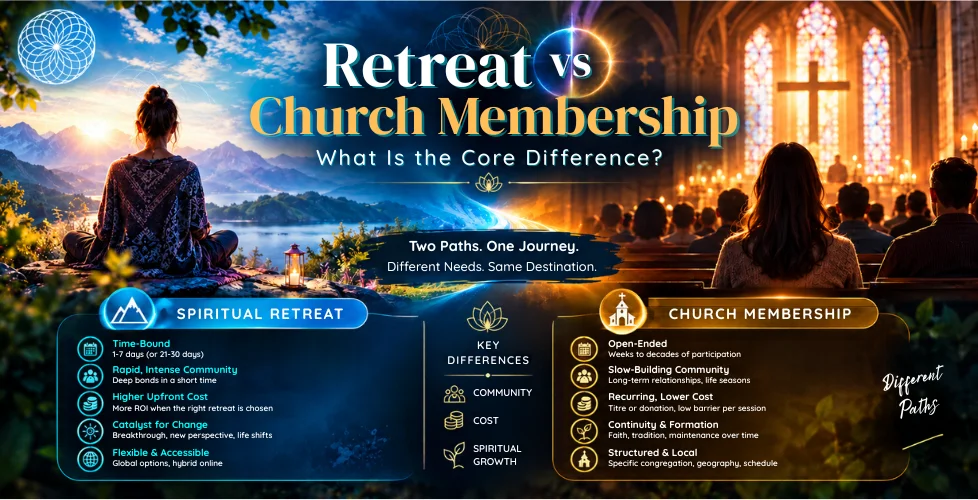
The key difference in Retreat vs Church Membership comes down to continuity versus concentrated transformation. Church membership is built for long-term spiritual growth, providing ongoing faith, community, and support over the years.
Retreats, by contrast, offer an immersive experience designed to create meaningful inner shifts within a shorter, more focused timeframe. Both can serve valuable spiritual purposes—they simply support different needs and approaches to personal transformation.
Key Differences in Community, Cost & Spiritual Growth
The key differences in community, cost, and spiritual growth can help you understand how church membership and spiritual retreats serve different roles in a personal spiritual journey.
| Dimension | Church Membership | Spiritual Retreat |
|---|---|---|
| Duration | Open-ended, ongoing. Weeks to decades of regular participation. | Time-bounded. Typically 1–7 days; some extended programs run 21–30 days. |
| Community | Slow-building, geographically rooted. Long-term relationships across life seasons. | Rapid, intense bonds. Retreat communities often describe profound connection formed in days. |
| Cost Model | Recurring tithe or donation spread across time. Low barrier to entry per session. | Larger upfront investment. Often reported as producing more ROI per dollar when the right retreat is chosen. |
| Spiritual Outcome | Continuity, formation, maintenance of faith and tradition over time. | Catalyst, breakthrough, pattern interruption, initiation of new life chapters. |
| Flexibility | Tied to specific congregation, geography, and schedule. | Accessible across geographies; many programs offer hybrid or online community components. |
| Authority Structure | Hierarchical (pastor, bishop, elder board) or congregational. Doctrinal accountability. | Facilitator-led, often with shared group authority. Less institutional, more experiential. |
| Integration Support | Built-in through weekly rhythm, small groups, and pastoral care. | Varies significantly; the best programs include structured post-retreat integration support. |
One insight that often surprises people: the most common frustration with church membership is not with belonging itself, but with the passivity that institutional attendance can enable. It is entirely possible to attend services weekly for years without any meaningful personal transformation.
The retreat does not replace the community. But it may be the thing that makes you capable of real participation in one.
Retreats, conversely, are inherently active. You can’t passively sit through a well-designed retreat the way you can passively sit through a Sunday sermon. The format demands engagement, vulnerability, and participation — producing a peak experience that, without proper integration support, can fade as quickly as a vivid dream.
Who Should Choose Church Membership Over a Retreat?
Church membership is the right choice for people who value long-term belonging, theological formation, weekly rhythm, and the kind of deep relational support that only sustained community can provide. It works best for people in a stable season of life who want a spiritual home, not a one-time experience.
You Need Long-Term Relational Grounding
The deepest forms of belonging — the kind where people know your name through illness and loss, celebrate your milestones, and maintain relationship with you across decades of life change — are built slowly. Church communities, at their best, become extended family. No retreat weekend can compress twenty years of relational history into a few days, nor should it try.
You Value Structured Theological Formation
If understanding what you believe, and why, matters to you — if you want systematic teaching, doctrinal depth, mentorship in a specific tradition, and the kind of accountability that comes from shared theological commitment — then a well-chosen church community provides this in a way that most retreat programs do not. Retreats produce experience. Church membership, at its best, produces formation.
You Are Raising a Family
Many families choose church membership partly for the shared values structure it provides across generations. Youth programs, rites of passage, a community of other parents navigating similar seasons, and the transmission of faith practices to children are all things that the church membership model is specifically designed to support. A retreat serves the individual spiritual journey. Membership can serve an entire family’s formation.
You Have Found a Healthy, Transformational Community
This point deserves emphasis: church membership only delivers these outcomes when the community is genuinely healthy. Passive attendance in a community that does not challenge, nourish, or know you offers very little. The question is not whether church membership is theoretically valuable — it clearly is. The question is whether the specific community available to you is the kind worth committing to.
Who Should Choose a Spiritual Retreat Over Church Membership?
A spiritual retreat is the right choice for people who feel spiritually stuck, are navigating a major life transition, or need a transformation that regular attendance hasn’t produced. It is especially effective for burnout recovery, healing work, faith deconstruction, and the beginning of a new spiritual chapter.
You Feel Spiritually Stuck Despite Consistent Effort
If you have been doing all the “right things” — attending services, reading, praying, journaling — but feel like you are treading water spiritually, a retreat offers something a weekly schedule cannot: a genuine pattern interrupt. It removes you from the environment that is maintaining your plateau and creates the conditions for a breakthrough.
You Are Navigating a Major Life Transition
Divorce, grief, career rupture, faith deconstruction, mid-life reckoning, recovery — these moments often demand more than a sermon or a small group can provide. They require focused, held space for the depth of inner work the transition demands. Many people find that a single well-timed retreat can do more for a major transition than years of conventional spiritual support.
You Are New to Spirituality and Belong to No Tradition
The fastest-growing spiritual category in the U.S. is people who describe themselves as “spiritual but not religious” — drawn to inner life, sacred practice, and transcendent experience, but without alignment to any specific tradition or institution. For this population, a retreat offers an entry point into lived spiritual experience without requiring doctrinal subscription.
You Are Experiencing Burnout
Research on burnout consistently identifies a loss of meaning — not merely a loss of energy — as its core feature. A retreat that reconnects you to what you find sacred and purposeful addresses burnout at the level of cause, not symptom. A vacation addresses the exhaustion. A retreat can address the void beneath it. The 2026 data showing 64% of U.S. travelers planning a retreat, with burnout cited as a primary motivator, reflects exactly this dynamic playing out at cultural scale.
At The Sacred Synthesis, the retreat framework is built around this kind of intentional, transformation-oriented spiritual work — combining ceremonially guided practice with structured community support to create conditions for genuine change rather than temporary inspiration.
Can You Have Both? What Does a Hybrid Spiritual Path Look Like?
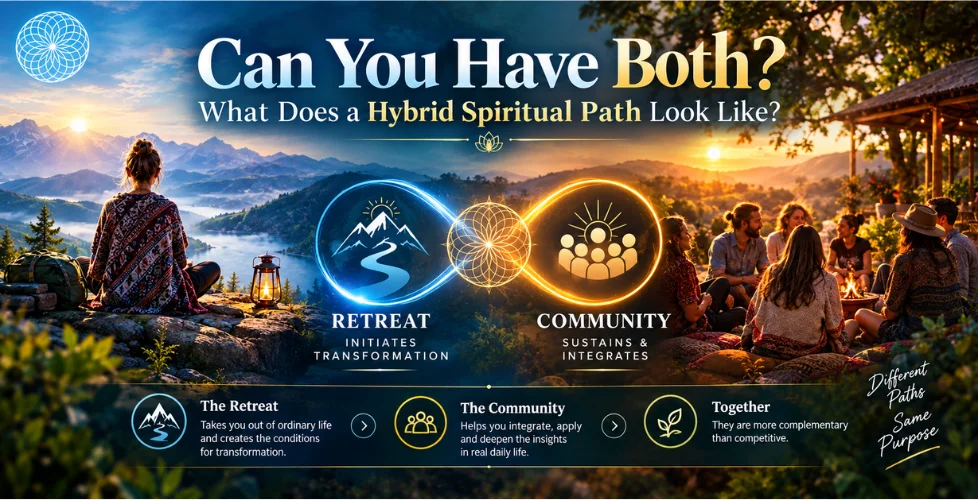
Yes. Many people are building hybrid spiritual lives that combine periodic retreats for transformation with ongoing community for belonging. The retreat initiates what the community sustains; the community integrates what the ceremony catalyzes. These two paths are more complementary than competitive.
Think of a retreat as a pilgrimage. It takes you out of ordinary life, removes the familiar scaffolding of routine, and creates conditions for transformation that normal existence rarely provides. But every pilgrimage ends with a return. What you return to — your community, your practices, your relationships — determines how much of what happened on the journey actually integrates and lasts.
Ongoing spiritual community functions as that return. It is where the insights of the retreat get tested, applied, deepened, and gradually embodied in the texture of real daily life. Without community, even the most profound retreat experience tends to fade as ordinary patterns reassert themselves. Without the retreat experience, even the most consistent community life can calcify into comfortable routine without genuine growth.
The 30-Day Protocol: Where Retreat Meets Community
The 30 Day Group Protocol at The Sacred Synthesis is one of the clearest expressions of this hybrid model available today. It combines the intensity and intentionality of a retreat experience — structured practices, guided progression, clear transformation arc — with the relational accountability and communal support that belong to the membership model. At thirty days, it is long enough to produce genuine integration, not just a peak moment.
For people who have experienced the frustration of a powerful retreat weekend that faded within weeks, the 30-day format addresses the most common failure point directly: the gap between transformation initiated and transformation sustained.
Ongoing Sacred Community as the Home Between Experiences
Beyond structured protocols, the Community at The Sacred Synthesis provides the relational continuity that spiritual growth requires between and beyond intensive experiences. Like a church small group in its intimacy — but aligned with the values and ceremonial framework of the Sacred Synthesis community — it functions as the living home base that sustains the work initiated in retreat.
If you are trying to decide between retreat and membership, consider this: you may not have to choose at all. The question is not always “which path” — sometimes it is “what sequence” and “what combination suits this particular season of my life.”
What Does the 2026 Data Say About the Great Spiritual Shift?
The Retreat vs Church Membership conversation reflects a broader shift in spiritual preferences from 2020 to 2026. As traditional religious membership declines, retreat and wellness spaces continue to grow, showing how people are rethinking community, spiritual practice, and personal growth.
The Church Membership Timeline: 1999 to 2026
According to Gallup’s landmark 2021 tracking study, the percentage of U.S. adults who reported belonging to a church, synagogue, or mosque fell from 70% in 1999 to 47% in 2020 — a 23-percentage-point collapse over two decades. This represented the first time in Gallup’s eight-decade tracking that religious membership fell below the 50% threshold. That is not a blip or an anomaly. It is a structural generational shift.
Weekly attendance numbers tell a similar story. As of 2026, approximately 20% of U.S. adults attend religious services weekly, with a broader measure of weekly or near-weekly attendance sitting at approximately 30%.
The demographic composition of active church membership has also shifted significantly. Frequent churchgoers today are disproportionately older, more conservative, and more rural than the general population. Among adults under 35 — the Millennial and Gen Z cohorts — the “nones” (those identifying as atheist, agnostic, or nothing in particular) have reached historic highs.
The Retreat Market Timeline: 2022 to 2033
While religious participation has plateaued or declined, the retreat and wellness tourism markets are among the fastest-growing segments in the broader wellness economy. The global wellness tourism market was valued at $651 billion in 2022 and is projected to nearly double to $1.4 trillion by 2027. Within that broader market, spiritual retreats specifically were valued at $8.3 billion in 2025, with projections reaching $15.2 billion by 2034.
An alternative market estimate places the spiritual and mindfulness retreats segment at $15.8 billion in 2025, potentially expanding to $38.5 billion by 2033. While the precise figures vary by methodology and market scope, the directional story across every estimate is consistent: rapid, sustained growth driven by mental health demand, burnout recovery, and a cultural appetite for intentional transformational experience.
The 2026 State of Retreats report from BookRetreats adds the behavioral layer: 64% of U.S. travelers reported having a retreat planned for 2026 — a figure that would represent one of the most significant shifts in intentional travel behavior in a generation.
What the Parallel Trends Mean Together
The 47% church membership figure and the 64% retreat planning figure sit side by side in 2026 as a remarkable portrait of a culture in spiritual transition. More Americans are planning retreats than belong to a church.
“Membership fell below 50% for the first time in Gallup’s eight-decade tracking — as retreat markets posted their fastest growth in history. This is not coincidence.”
The correct interpretation is not that people are becoming less spiritual. Every major piece of data suggests the opposite — that spiritual hunger is rising, not falling. What is changing is the institutional form that spirituality takes.
How Do You Actually Decide Between a Retreat vs Church Membership?
When considering Retreat vs Church Membership, start by identifying what feels missing from your spiritual life. If you’re seeking community, continuity, and a deeper sense of belonging, church membership may be the better fit. If your focus is transformation, breakthrough, or a meaningful reset, a retreat may be more appropriate. When you need both, consider an approach that combines ongoing community support with transformative retreat experiences.
Step 1: Audit Your Current Spiritual Experience Honestly
Before choosing between the two paths, get clear on what is actually happening in your spiritual life right now. Are you stagnant? Isolated? Burned out? Spiritually curious but unanchored? The shape of your current deficit is the most reliable signal about what kind of solution will actually help.
Step 2: Distinguish Between Belonging and Becoming
These are the two primary spiritual needs, and they require different containers. Belonging — the need to be known, held, and connected over time — is best served by ongoing community. Becoming — the need to change, grow, break through, or initiate something new — is best served by a retreat or intensive structured experience.
Step 3: Factor In Your Season of Life
Seasons matter enormously in this decision. A person entering a major life transition typically needs the catalyst that a retreat provides before they have the internal stability to benefit from membership. A person coming out of a significant transformational experience often needs community more than another retreat, to integrate and sustain what changed.
Step 4: Assess Your Relationship to Institutional Structure
Church membership, even at its healthiest, involves doctrinal alignment, hierarchical authority, and institutional participation. For people who find this grounding and life-giving, it is a genuine gift. For people who find it constraining or inauthentic — particularly those who have been hurt by religious institutions — a less institutional model may serve significantly better.
Step 5: Start Somewhere and Learn From It
The best spiritual decision is the one you actually make and follow through on. One genuine experience — a retreat attended, a community joined, a protocol completed — will tell you more about your actual needs than any amount of comparative research. Take the next step available to you and let the experience inform the next question.
How Does The Sacred Synthesis Serve This Spiritual Moment?
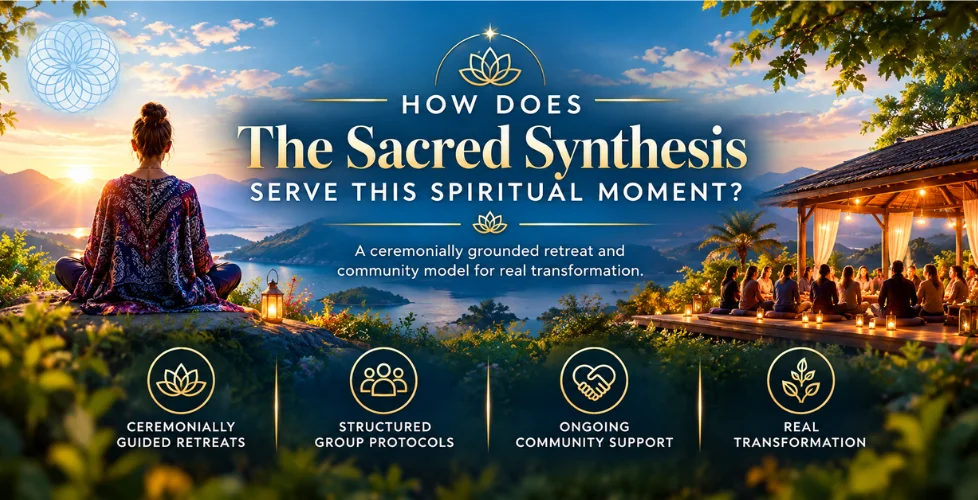
The Sacred Synthesis offers a ceremonially grounded retreat and community model that integrates transformation-focused sacred experiences with structured group protocols and ongoing community support — designed for people who are done with passive spirituality and ready for genuine change.
For many people reading this, the comparison between retreat and church membership reflects a deeper, more personal question: where do I find a spiritual home that actually works for who I am in 2026?
The Sacred Synthesis was built to answer exactly that question. As a sacred community that integrates ceremonially guided retreat experiences with structured protocols and ongoing group support, it occupies a distinct position in today’s spiritual landscape — honoring the depth and intentionality of traditional sacred practice while building the flexibility and authenticity that modern seekers require.
The Sacred Bundle: Tools for Ceremonial Practice
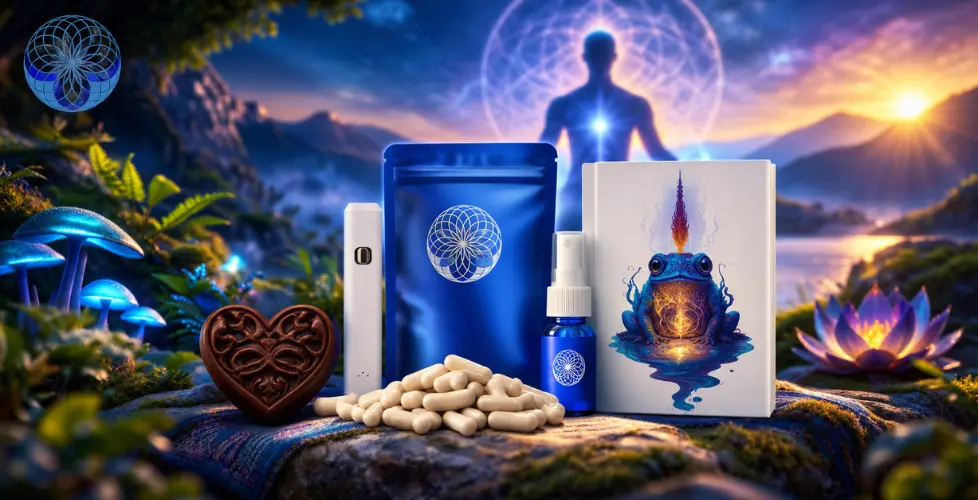
The Sacred Bundle reflects The Sacred Synthesis’s curated approach, bringing together essential tools and sacramental materials to support authentic ceremonial practice. It is not a product in the conventional sense — it is a container for intentional spiritual experience, supporting the kind of deep inner work that defines the sacred retreat model at its best and extending that practice into personal daily life between community experiences.
The 30 Day Group Protocol: Retreat Intensity With Community Continuity
The 30 Day Group Protocol is the most direct expression of the hybrid model described throughout this post. It runs for thirty days — long enough to produce genuine integration, short enough to commit to during an ordinary season of life. The structure is intensive enough to catalyze real transformation, and communal enough to sustain it.
Whether you are transitioning out of a church community that no longer fits, entering a new chapter of spiritual growth, or seeking your first real experience of intentional sacred community, the 30-day protocol provides a structured on-ramp with clear support from beginning to end.
Sacred Community: Belonging Between Experiences
The ongoing Sacred Synthesis Community provides the relational continuity that sustains spiritual growth between deeper ceremonial experiences. Think of it as the “church small group” equivalent within the Sacred Synthesis framework — intimate, active, and aligned with the ceremonial and transformational values of the community rather than a doctrinal or institutional structure.
Taken together, the three offerings — Sacred Bundle, 30 Day Protocol, and ongoing Community — form a complete spiritual formation system. Not a replacement for every form of belonging, but a genuinely different model of sacred community built for a moment when traditional membership structures are no longer serving large portions of the spiritually serious population.
Frequently Asked Questions: Retreat vs Church Membership
Explore common questions about the differences between spiritual retreats and traditional church membership, including purpose, commitment, community, and spiritual practice.
Q1. What is the difference between a spiritual Retreat vs Church Membership?
Retreat vs Church Membership highlights two different approaches to spiritual growth. Church membership offers an ongoing connection to a community, with regular gatherings and shared practices, while a spiritual retreat is typically a short, intensive experience focused on reflection, renewal, or personal transformation.
Q2. Is church membership declining in the United States?
Yes. Gallup data shows U.S. church, synagogue, or mosque membership fell from 70% in 1999 to 47% in 2020 — the first time in eight decades it dropped below 50%. Weekly attendance has settled at approximately 20–30% of U.S. adults as of 2026.
Q3. Are spiritual retreats growing in popularity in 2026?
Yes — significantly. The spiritual and mindfulness retreats market is valued at $15.8 billion in 2025 and projected to reach $38.5 billion by 2033. A 2026 report found 64% of U.S. travelers had a retreat planned this year, driven by burnout, mental health, and intentional travel.
Q4. Can I attend a spiritual retreat if I am still a church member?
Absolutely. Retreats and church membership are not mutually exclusive. Many people use periodic sacred retreats as a complement to ongoing community life — a concentrated transformation experience that deepens and revitalizes their everyday participation in a faith community.
Q5. What is a 30-day group spiritual protocol?
A 30-day group protocol is a structured, community-based spiritual journey that combines daily guided practices, group accountability, and intentional progression over one month — delivering both the transformation intensity of a retreat and the relational continuity of ongoing community membership.
Q6. How do I know if a spiritual retreat is right for me?
If you feel spiritually stagnant, are navigating a major life transition, or have been doing consistent spiritual practice without experiencing real growth, a retreat is likely the right next step. Retreats are built for breakthrough — they work best when you are ready for something to genuinely change.
Q7. What makes a sacred retreat different from a standard wellness retreat?
A sacred retreat integrates ceremonial practice, spiritual intention, and guided community within a structured container — going significantly deeper than spa-based or fitness-focused wellness programs. The difference is the presence of a spiritual formation framework, not just physical or mental restoration.
Final Thoughts: Choosing Your Spiritual Path in 2026
The rise of retreat culture and the decline of traditional church membership are not happening in opposition to each other. They are two data points in the same cultural narrative — a generation of spiritually serious people reimagining what sacred community looks like when the old containers no longer hold.
Church membership, at its best, offers something irreplaceable: long-term belonging, doctrinal depth, and the kind of relationships that span decades and hold you through life’s hardest moments. Spiritual retreats, at their best, offer something equally irreplaceable: concentrated transformation, a genuine reset of spiritual perspective, and an experience of the sacred that cuts through the noise of ordinary life in ways that weekly routine rarely can.
Retreat vs Church Membership isn’t always an either-or choice. A retreat can spark transformation, while church membership provides ongoing support and integration. Together, they can create a balanced path for deepening spiritual practice and long-term growth.
At The Sacred Synthesis, this is the conviction underlying everything we offer. The power of a guided ceremonial experience to open doors that years of routine couldn’t unlock — and the equal necessity of ongoing community to walk through those doors with you. Both matter. Both belong in a serious spiritual life.
If you are ready to explore what intentional sacred community looks like in 2026, the 30 Day Group Protocol is the most direct starting point. And if you want to equip your own daily ceremonial practice, begin with The Sacred Bundle.
Your spiritual life is worth more than showing up out of habit. It is worth choosing — deliberately, repeatedly, and with your whole attention.