There is a moment — quiet, sacred, and unmistakably real — when you sense that something deeper is calling you forward. If you have found your way here, that moment may already be unfolding. Working with our sacraments is not just a practice; it is a deliberate act of turning inward, of choosing growth over comfort and awareness over autopilot. This guide was created to walk you through every dimension of intentional ceremonial work — from your very first preparation to your deepest integration. Whether you are brand new to sacred practice or returning with renewed purpose, what you are about to learn will transform the way you approach your inner journey.
Read on, because the path to meaningful, safe, and soul-aligned ceremonial experience begins right here.
What Are ” Sacraments”? Understanding the Foundation
Before learning how to work with our sacraments, it is essential to understand what they are and why they matter.
At The Sacred Synthesis, our sacraments are carefully curated ceremonial substances and tools designed to support expanded states of consciousness, emotional healing, and spiritual growth. They are not recreational substances — they are intentional allies. Each product in our sacrament collection is developed with deep respect for ancestral wisdom traditions, modern consciousness research, and the lived experience of practitioners who have walked this path before you.
These are not shortcuts. They are invitations.
When approached with proper preparation, clear intention, and mindful integration, our sacraments can open doorways within you that conventional healing modalities may never reach. They can illuminate blind spots, dissolve emotional armor, reconnect you with your authentic self, and help you experience the kind of clarity that changes everything.
Read More: Low vs. High Dose 5-MeO-DMT Ceremonies: A Sacred Practitioner’s Guide to Choosing Your Path
Why Intentional Ceremonial Work Matters
The difference between a transformational sacramental experience and a confusing or overwhelming one often comes down to one thing: intentionality.
Across human history, indigenous cultures, shamanic traditions, and wisdom lineages around the world have known something that modern society is only beginning to rediscover — that powerful ceremonial substances must be held within a container of preparation, respect, and integration. Without that container, even the most potent sacrament can feel chaotic or meaningless. With it, even a subtle shift can become a profound turning point.
Intentional ceremonial work means:
- Arriving with awareness rather than expectation
- Creating the conditions for your experience to unfold safely
- Honoring the intelligence of the sacrament you are working with
- Committing to the integration process after the ceremony itself
This is what separates a genuine sacred practice from mere experimentation. And it is exactly what this guide is designed to support.
Who Can Benefit from Sacraments?
Our sacraments are designed for a wide range of seekers — but they are not for everyone in every season of life. Understanding who benefits most from this work helps you approach it with honesty and discernment.
You may be well-positioned to work with our sacraments if you are:
- Spiritually curious and open-minded, with a genuine desire to explore the inner landscape
- Emotionally ready for depth, willing to meet what arises rather than resist it
- Committed to integration, understanding that the ceremony is only the beginning
- Physically well, without contraindicated medications or serious health conditions
- Seeking personal transformation, whether that looks like healing, clarity, creativity, or expanded awareness
- Interested in ceremonial wellness, conscious ritual, and intentional living
This work is not recommended during periods of acute mental health crisis, nor is it appropriate if you are currently on medications such as SSRIs, MAOIs, or lithium without proper medical guidance. Always consult a qualified healthcare provider before beginning any ceremonial practice.
Step-by-Step Guide: How to Work with Sacraments
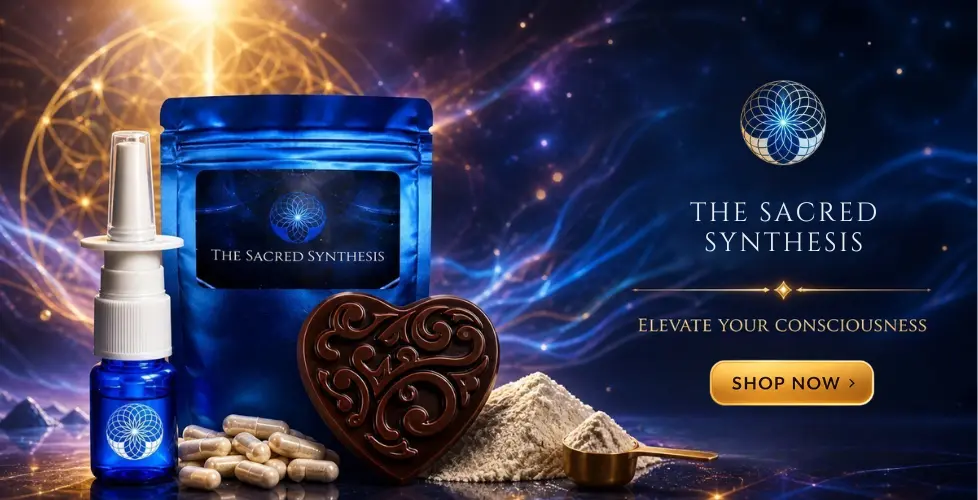
Learn how to work with Our Sacraments step by step for a safe and meaningful spiritual experience.
Step 1: Research and Choose Your Sacrament Wisely
Not every sacrament is the right fit for every person at every moment. Spend time exploring the full sacraments collection and reading about each option with an honest eye toward your current needs and experience level.
Some sacraments are gentle entry points for beginners. Others are deeper invitations for those with established practice. A few highlights from our collection include:
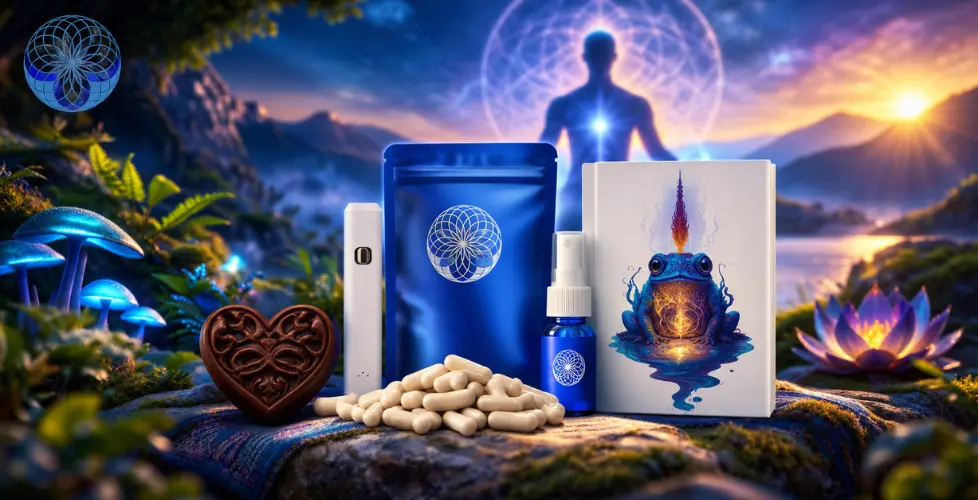
- Coyote Cacao Lovers Edition — Ceremonial-grade cacao crafted to open the heart, deepen emotional presence, and support group or solo ceremony. Cacao has been used in Mesoamerican traditions for thousands of years as a heart medicine. It is one of the most approachable and powerful entry points into ceremonial work, offering warmth, connection, and gentle expanded presence without overwhelming intensity.
- Jaguar Light Wand — A ceremonial tool designed to amplify your energetic field and support energetic alignment within your practice. When used intentionally, the Jaguar Light Wand brings a focused, activating presence to ceremony — ideal for those ready to work with subtle energy practices alongside their sacramental journey.
- Psilomethoxin — A unique consciousness compound in our sacrament collection, Psilomethoxin is approached by experienced practitioners seeking deep introspective work and expanded states of awareness. As with all of our sacraments, working with Psilomethoxin is most powerful when paired with thorough preparation and a clear integration framework.
- 5- MeO Unity Mist — A ceremonial mist crafted to cleanse your space, calm your nervous system, and signal to your body and mind that sacred space is being opened. Unity Mist is a beautiful support tool for any ceremony — helping you transition from the ordinary world into the ceremonial container with grace and ease.
Choose based on honest self-assessment, not ego. The right sacrament meets you where you are.
Step 2: Set Your Intention
Intention is the compass of ceremonial work. Without it, you may drift. With it, even the unexpected becomes purposeful.
Before your ceremony, spend meaningful time asking yourself:
- What am I seeking from this experience?
- What part of my life or inner world is calling for attention?
- Am I willing to receive what arises — even if it is uncomfortable?
- What am I ready to release, understand, or transform?
Write your intention down. Keep it simple — one or two clear sentences work better than a multi-paragraph list. Your intention does not need to be complicated. It just needs to be honest.
Examples of clear ceremonial intentions:
- “I am open to receiving insight around my patterns in relationship.”
- “I invite healing for the grief I have been carrying.”
- “I ask for clarity on my purpose and creative path.”
Hold your intention lightly during the ceremony itself. Set it, release it, and allow the experience to unfold.
Step 3: Prepare Your Body
Ceremonial wellness begins with the physical body. What you consume in the days leading up to your ceremony directly affects your receptivity and the quality of your experience.
In the 24–72 hours before ceremony:
- Eat clean, light, whole foods — minimize processed foods, heavy meats, and excess sugar
- Stay well-hydrated — water is your ally before and during ceremony
- Avoid alcohol — it clouds the energetic and emotional field
- Reduce caffeine — especially in the 24 hours before ceremony
- Get adequate rest — your nervous system works best when it is not depleted
- Move your body gently — yoga, walking, or breathwork can open physical channels
If you are working with a specific protocol like The Sacred Bundle or the 30 Day Group Protocol, follow any additional dietary guidance provided within those containers.
Step 4: Prepare Your Mind and Emotions
Physical preparation is necessary — but it is only half of the readiness equation.
Emotional and psychological preparation may look like:
- Journaling — explore what is alive in you, what fears you hold, what you hope for
- Meditation — even ten minutes of daily stillness helps regulate your nervous system
- Therapy or somatic work — integrating prior material creates space for new insight
- Honest conversations — if you are processing something in relationship, address it before ceremony
- Reducing unnecessary stimulation — limit social media, news, and emotionally charged content in the days before
The mind you bring to ceremony is the mind the ceremony will work with. Quiet it with care.
Read More: Psilomethoxin and the Path to Unity Consciousness
Step 5: Create Sacred Set and Setting
“Set and setting” — the mindset you carry in and the environment you inhabit — is one of the most researched and consistently validated factors in the quality and safety of any ceremonial experience. This concept, developed widely in consciousness research, remains as relevant today as ever.
Set (Mindset):
- Arrive with openness and surrender, not grasping or agenda
- Let go of outcomes — your role is to be present, not to engineer results
- Bring compassion for yourself — you are about to meet yourself more fully
Setting (Environment):
- Choose a space that feels safe, clean, and comfortable
- Remove clutter and create visual harmony
- Use Unity Mist to cleanse and consecrate the space
- Prepare blankets, pillows, water, and any items of personal significance
- Curate a playlist or choose silence — both are valid ceremonial companions
- Dim lighting, or use candles if safe and permitted
- Ensure you will not be interrupted for the duration of your ceremony
If you are working in a group setting through a protocol like the 30 Day Group Protocol, your facilitator will guide the shared setting. Allow yourself to receive that container.
Step 6: Open the Ceremony
Ceremony begins with a conscious crossing of the threshold. This is not the moment when you simply ingest a sacrament — it is the moment you consciously choose to enter sacred space.
How you might open your ceremony:
- Sit quietly and take three slow, intentional breaths
- Speak or silently hold your intention
- Offer gratitude — to the sacrament, to the tradition it carries, to the moment
- If using Coyote Cacao Lovers Edition, prepare and drink it slowly and with full presence, as has been done in ceremonial traditions for millennia
- Apply or activate any ceremonial tools like the 5- MeO Jaguar Light Wand with deliberate intention
There is no rigid script for this. The act of doing it consciously — of pausing, of choosing, of arriving — is what makes it ceremony rather than consumption.
Step 7: Surrender into the Experience
This is perhaps the most important — and the most challenging — step.
Once ceremony begins, your primary task is to allow. Not to steer. Not to analyze. Not to perform. Simply to be present with whatever arises.
Practical guidance for the ceremonial window:
- Breathe — when something feels intense, return to the breath
- Trust the intelligence of the sacrament — it often knows where you need to go
- Let emotions move through you — tears, laughter, grief, awe are all welcome
- Avoid reaching for your phone — stay inside the container
- Lie down or move as needed — your body may guide you
- If you feel lost, return to your intention — it is your anchor
If something difficult arises, remember: it is arising to be met, not to overwhelm you. Presence is your most powerful tool.
Step 8: Close the Ceremony Consciously
Just as you opened the ceremony with intention, close it with care.
A conscious closing might include:
- Sitting quietly and acknowledging what you experienced
- Expressing gratitude — aloud or internally
- Drinking water and nourishing your body gently
- Writing in your journal while memories and insights are fresh
- Signaling to your nervous system that the ceremonial window is closing — a simple phrase, a gesture, or a moment of stillness works beautifully
Rushing out of ceremony into ordinary life without a closing can leave you feeling ungrounded or emotionally raw. Give yourself the gift of a transition.
Step 9: Integrate — This Is Where the Real Work Begins
Integration is the process of weaving what you experienced in ceremony into the fabric of your daily life. Without integration, even the most profound ceremony can fade like a dream by morning.
Effective integration practices include:
- Daily journaling — track insights, dreams, emotional shifts, and patterns you notice
- Somatic movement — yoga, dance, and bodywork help anchor insights in the physical body
- Talking with a trusted person — a therapist, integration coach, or trusted friend
- Resting more than usual — your system has done deep work and needs recovery
- Following inspired action — if ceremony revealed something clear, honor it
- Revisiting your intention — what did you receive in relation to what you asked?
Integration is not passive. It is an active commitment to becoming who you experienced yourself capable of being. The 30 Day Group Protocol at The Sacred Synthesis is specifically designed to support this ongoing integration work within a held container of community and guidance.
Best Practices for Working with Our Sacraments
Following these principles consistently will support safety, depth, and ongoing growth:
Principle | Key Insight |
Start Small | Begin with a lower amount and build gradually. |
Space Sessions | Allow time for proper integration between ceremonies. |
Keep Notes | Maintain a ceremonial journal for reflection. |
Seek Community | Guided or community practice reduces risk. |
Check Safety | Review medications and health conditions first. |
Trust Yourself | Honor your timing if you feel unready. |
Follow the Basics | Prioritize intention, preparation, set, setting, and integration. |
Common Mistakes to Avoid
Even experienced practitioners make these errors. Awareness is your best protection:
1. Skipping preparation
Arriving to ceremony unprepared — emotionally, physically, or practically — significantly increases the likelihood of a difficult or unproductive experience. Preparation is not optional; it is foundational.
2. Treating sacraments as recreational
Our sacraments are sacred ceremonial allies. Approaching them casually, without intention or respect, diminishes their potential and increases avoidable risk.
3. Ignoring integration
Many people invest deeply in ceremony and almost nothing in integration. This is perhaps the most common and most costly mistake in ceremonial wellness. The ceremony plants the seed. Integration is how it grows.
4. Chasing intensity
More is not better. Bigger doses, more frequent ceremonies, or stacking multiple sacraments does not equal deeper transformation. Depth comes from presence, not intensity.
5. Doing this alone without support
Especially for newer practitioners, working within a container — whether that is a facilitator, the 30 Day Group Protocol, or The Sacred Bundle — provides both safety and amplified benefit.
6. Neglecting set and setting
An unprepared environment can disrupt even a beautiful ceremony. Take the time to create a space that genuinely supports you.
Read More: Somatic Healing Guide: When Mind Understands, Body Reacts
Building a Consistent Sacred Practice
Single ceremonies can be meaningful. But a sustained, consistent ceremonial practice is where the most enduring transformation lives.
Building consistency looks like:
- Working with a protocol that structures your practice over time (such as the 30 Day Group Protocol)
- Choosing a sacrament that aligns with your long-term intentions and building familiarity with it
- Creating ceremonial rhythms — perhaps aligned with lunar cycles, seasonal transitions, or personal milestones
- Staying connected with community — the alchemy of shared practice amplifies individual work exponentially
- Continuously deepening your integration practices so each ceremony builds on the last
A consistent practice does not require constant ceremony. It requires consistent awareness, honest self-reflection, and genuine commitment to your own becoming.
Community and Protocol Support
You do not have to walk this path alone.
The Sacred Synthesis offers structured support for those who want to go deeper with intentional guidance. The Sacred Bundle provides a curated ceremonial experience, while the 30 Day Group Protocol creates a held community container for sustained transformation and accountability.
Working within a protocol or community setting offers several distinct advantages:
- Guidance from experienced facilitators who hold the container with expertise
- Shared wisdom and witness from fellow practitioners
- Structured integration support across the full arc of your experience
- Safety and accountability that solo practice cannot provide
If you are new to sacramental work, starting within a supported framework is not a concession — it is wisdom.
Join Our Community
Continue your journey alongside a like-minded community dedicated to conscious growth, integration, and transformational practice. Inside our Skool community, you can access ongoing support, shared experiences, educational resources, and deeper protocol guidance in a safe and intentional space.
Frequently Asked Questions (FAQ)
Q1: What are Our Sacraments?
Our Sacraments are ceremonial tools and substances designed to support intentional spiritual and consciousness-expanding practices. They are rooted in wellness, ritual, and mindful personal growth.
Q2: Is it safe to work with sacraments alone for the first time?
Beginners are encouraged to work in a guided or supportive setting whenever possible. Always research carefully and check for any health or medication concerns beforehand.
Q3: How do I choose the right sacrament?
Start by considering your experience level, emotional state, and personal intentions. When unsure, begin with gentler practices and build gradually.
Q4: How long does integration take after a ceremony?
Integration often continues for weeks or even months after a ceremony. Journaling, reflection, and rest can help deepen the process over time.
Q5: Can I combine multiple sacraments together?
Combining sacraments should only be approached with proper knowledge and experience. Many practitioners find deeper benefits by working with one sacrament at a time.
Conclusion: Begin with Intention. Trust the Process.
Working with our sacraments is one of the most profound commitments you can make to your own growth, healing, and awakening. It is not always comfortable. It is not always linear. But for those who approach it with preparation, reverence, and a genuine desire to know themselves more fully, it is consistently one of the most life-changing choices they have ever made.
You now have the framework. The preparation practices. The step-by-step guidance. The integration roadmap. What comes next is yours to choose.
Explore the full sacraments collection at The Sacred Synthesis. Consider beginning with Coyote Cacao Lovers Edition as a heart-opening entry point, or explore whether the 30 Day Group Protocol is right for where you are right now. Bring the Unity Mist into your space and let it mark the beginning of something meaningful.
The sacrament does not do the work for you. But it does meet you — fully, wisely, and exactly where you are.
Show up. Prepare well. Integrate deeply.
That is how transformation actually happens.